
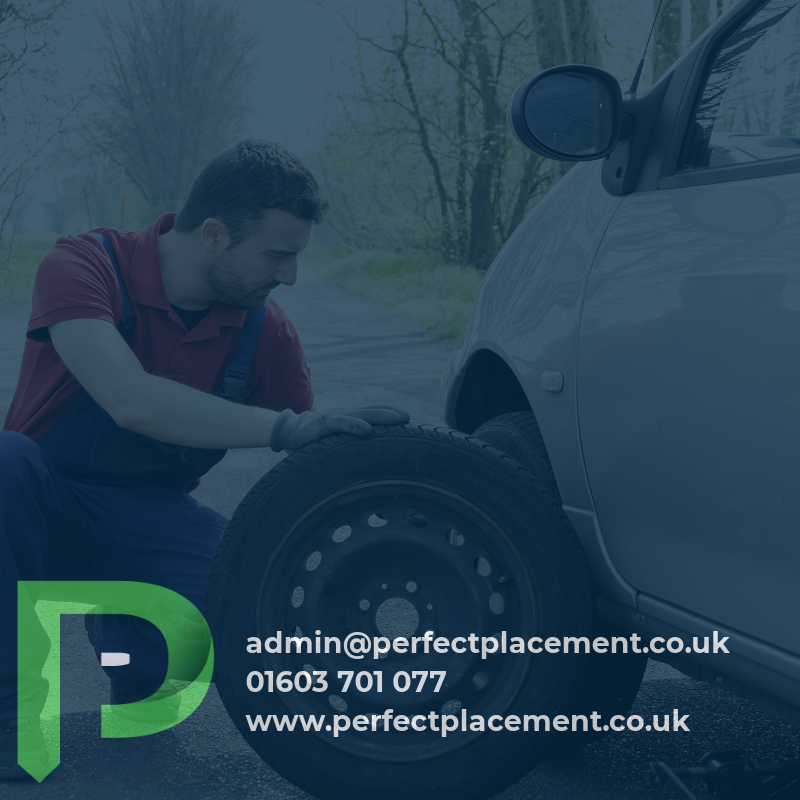
A Roadside Assistance Technician diagnoses vehicle faults and carries out repairs away from a traditional workshop, helping motorists get moving again or arranging recovery when a safe roadside repair is not possible. Work can take place at the roadside, at a customer's home, workplace or another location depending on the employer and type of service.
Job titles vary considerably. Roadside Technician, Roadside Vehicle Technician, Mobile Technician, Patrol and Recovery Technician can all describe similar roles, although the balance between diagnostics, repair and vehicle recovery differs between employers.
TL;DR
Roadside assistance suits experienced Technicians who are confident diagnosing faults independently, dealing directly with customers and working outside a traditional workshop environment. Perfect Placement vacancy data from January 2025 to June 2026 shows an average basic salary of approximately £40,020 across Roadside Assistance Technician vacancies, rising to around £52,620 average advertised OTE.
Key Takeaways
- The role combines diagnostics, repair and customer service. Technicians need to identify faults and decide whether a vehicle can be safely repaired where it has broken down.
- Independent working is fundamental. You may work alone for much of the shift, although employers normally provide technical and operational support when required.
- Average basic pay was approximately £40,020 across Perfect Placement's Roadside Assistance vacancy data, with average advertised OTE of around £52,620.
- A full UK driving licence is normally essential or strongly preferred. Employers may also specify acceptable licence endorsements depending on the role and vehicle.
- Shift work is common. Breakdown assistance is not limited to normal workshop hours, so evenings, weekends and rota-based working can form part of the job.
What Does a Roadside Assistance Technician Do?
The job centres on diagnosing vehicle problems away from a workshop and deciding the safest and most practical way to get the customer moving again. This can mean repairing the fault at the scene, carrying out a temporary repair where appropriate, arranging onward recovery or advising the customer on the next step.
Typical responsibilities can include:
- attending breakdowns at roadsides, homes, workplaces and other locations
- diagnosing mechanical and electrical faults
- using diagnostic equipment to identify warning lights and system faults
- repairing minor mechanical or electrical problems where safe and practical
- dealing with flat or damaged batteries
- assisting with tyre or wheel-related issues where the service allows
- checking vehicle condition before deciding whether it can continue safely
- arranging recovery when a repair cannot be completed at the scene
- explaining faults and next steps clearly to customers
- recording work completed and communicating with operational support teams.
The key difference from workshop-based vehicle repair is the environment. A workshop Technician has access to lifts, a wider range of equipment and colleagues nearby. Roadside Technicians need to assess the vehicle, the fault and the location before deciding what work can safely be completed with the equipment available.
Roadside Technician, Mobile Technician, Patrol or Recovery Technician?
These titles often overlap, so the actual duties matter more than the job name. Some positions focus heavily on roadside diagnosis and repair, while others include home assistance, mobile servicing or a greater level of recovery work.
A Roadside Technician or Patrol will often aim to diagnose and repair the vehicle at the scene where possible. A Mobile Technician may carry out similar work but could also attend scheduled jobs at customers' homes or workplaces. Recovery-focused positions can involve transporting or towing vehicles when a repair cannot be completed safely.
Always check whether a vacancy is primarily a repair role, a recovery role or a mixture of both before comparing salary and working patterns.
What Equipment Is Used?
Roadside work relies on portable diagnostic and repair equipment that allows the Technician to investigate common faults without the facilities of a full workshop. Depending on the employer, equipment can include diagnostic scanners, battery testing and charging equipment, hand tools, electrical testing equipment, tyre inflation equipment and safety equipment for roadside working.
The diagnostic element is particularly important. For example, a warning light does not automatically identify the failed component. A Technician may need to read fault codes, examine live data, test electrical supply or rule out related problems before deciding whether a roadside repair is appropriate.
This is why strong diagnostic ability can matter as much as speed. Replacing a component based only on a fault code may not solve the underlying problem if the actual cause is wiring, low voltage or another related system.
Roadside Safety and Working Alone
Every job begins with deciding whether the location is safe enough to work in. Roadside repair exposes Technicians to moving traffic, poor weather, limited space and customers who may already be in a stressful situation.
The Health and Safety Executive advises roadside repair and recovery businesses to assess risks from other road users, provide suitable equipment and PPE, train employees appropriately and establish safe systems of work.
Working independently does not mean working without support. Roadside Technicians commonly have access to operational controllers, technical assistance or recovery support when a fault cannot be resolved safely at the scene. Knowing when to stop attempting a repair and request additional support is part of working professionally.
Further workplace safety guidance is available from the Health and Safety Executive.
Skills, Qualifications and Getting Into Roadside Assistance
Roadside employers generally look for experienced automotive Technicians who can diagnose and repair faults confidently without constant supervision. Requirements vary, but practical workshop experience is particularly valuable because roadside work often gives the Technician fewer tools, less information and less immediate assistance than a workshop environment.
Qualifications and Technical Experience
Vehicle maintenance and repair qualifications at Level 2 or Level 3 are commonly relevant to roadside work, although individual employers set their own requirements. Experience can be just as important because Technicians need to apply their knowledge quickly across different vehicles and fault types.
Useful experience can include:
- vehicle servicing and mechanical repair
- electrical fault finding
- diagnostics and interpreting fault codes
- battery and charging-system diagnosis
- braking and suspension systems
- basic tyre and wheel work
- working across different makes and models
- hybrid and electric vehicle awareness or qualifications.
Modern roadside work increasingly involves hybrid and electric vehicles. HSE guidance highlights additional hazards associated with high-voltage systems, stored electrical energy and damaged batteries, so Technicians must work within the level of EV training and competence provided for their role.
Skills Employers Look For
Technical ability alone is not enough because the Technician is often both the mechanic and the face of the breakdown service. Employers commonly value:
- Diagnostic ability: identifying faults methodically with limited equipment and information.
- Independent judgement: deciding whether a repair is safe and realistic at the location.
- Customer service: explaining problems calmly to motorists who may be frustrated or worried.
- Time management: managing jobs efficiently across a geographic area.
- Adaptability: dealing with different vehicles, faults, locations and weather conditions.
- Communication: keeping customers and operational support teams updated.
- Safety awareness: recognising when the location or repair creates unacceptable risk.
Do You Need a Driving Licence?
A full UK driving licence is normally essential or strongly preferred because travelling between customers is fundamental to the role. Employers may prefer a clean licence or set limits on the number or type of penalty points they will accept, particularly where the Technician drives a company vehicle throughout the working day.
Recovery positions can have additional licence requirements depending on the type and weight of vehicle being driven. Candidates should therefore check the exact vacancy rather than assuming every roadside or recovery role has identical licence requirements.
If you are considering moving into roadside assistance from a workshop role, our Vehicle Technician Career Guide explains the wider technical foundation employers typically look for.
Roadside Assistance Technician Salary, Hours and Working Environment
Roadside Assistance Technician vacancies handled by Perfect Placement between January 2025 and June 2026 averaged approximately £40,020 basic salary and £52,620 advertised OTE. Across 590 Roadside Assistance vacancy records with salary information, basic salaries ranged from approximately £31,860 to £55,870.
£40,020
Average Basic Salary
£52,620
Average OTE
£31,860–£55,870
Basic Salary Range
£12,670
Average Bonus Where Offered
The difference between basic salary and OTE is particularly important in roadside recruitment. Many vacancies offer substantial performance-related earnings, so two jobs advertising similar OTE figures can have noticeably different guaranteed basic salaries.
When comparing offers, check the basic salary, shift allowance, bonus structure, overtime arrangements and exactly what needs to be achieved to earn the advertised OTE. For wider automotive pay information, visit our Automotive Salary Insights hub.
Perfect Placement Market Insight
One of the biggest mistakes candidates can make when comparing roadside jobs is looking only at the headline OTE. Perfect Placement's vacancy data shows a sizeable difference between average guaranteed basic salary and advertised earning potential.
The role itself also varies more than the title suggests. Across the vacancies we recruit, Roadside Technician, Mobile Technician, Patrol and Recovery Technician roles can involve different combinations of roadside repair, customer-home attendance and recovery work.
Perfect Placement has specialised in automotive recruitment since 2003, and the salary figures above are calculated from Roadside Assistance vacancies handled by our recruitment team rather than generic salary estimates.
Hours and Shift Patterns
Shift work is common because breakdown assistance needs to operate outside normal workshop opening hours. Depending on the employer, rotas may include evenings, weekends, early starts, late finishes or other shift patterns.
This can be a major change for a Technician moving from a Monday-to-Friday workshop. The trade-off can be greater independence and different earning opportunities, but candidates should compare working hours and rota commitments just as carefully as salary.
What Is the Working Environment Like?
No two shifts are exactly the same because the Technician travels to the vehicle rather than waiting for work to arrive at a workshop. One job may involve diagnosing a starting fault on a customer's driveway, while the next could be a vehicle stopped in a more exposed roadside location.
Technicians therefore need to be comfortable working outdoors, travelling throughout a defined area and solving problems without immediate access to a workshop full of tools. At the same time, established roadside employers usually provide a support network for situations requiring further technical advice, recovery or escalation.
Career Progression and Future Opportunities
Roadside experience can lead to senior patrol, technical support, recovery, training, management or wider mobile technical roles. The combination of diagnostics, independent decision-making and customer-facing experience can also strengthen a Technician's wider automotive career.
Possible progression routes include:
- Vehicle Technician → Roadside Technician: moving from workshop repair into independent mobile diagnosis.
- Roadside Technician → Senior or Specialist Patrol: taking on more complex diagnostic work or supporting colleagues.
- Roadside Technician → Technical Support: using diagnostic experience to advise other mobile Technicians.
- Roadside Technician → Recovery Technician: developing additional recovery skills and relevant licence capability.
- Roadside Technician → Team Leader or Operations Management: moving into supervision, performance and operational responsibility.
Roadside experience can also transfer into dealership, independent garage or specialist technical roles if a Technician later decides to return to a workshop environment. Browse our Vehicle Technician jobs to compare current technical opportunities.
How Is Roadside Assistance Becoming More Technical?
Modern breakdown work increasingly requires electronic diagnostics, electrical knowledge and an understanding of hybrid and electric vehicles. Many faults that once involved straightforward mechanical inspection now require Technicians to interpret warning messages, diagnostic data and increasingly complex electrical systems.
Electric and hybrid vehicles bring additional hazards because high-voltage components may remain dangerous even when a vehicle appears switched off. Damaged batteries can also create electrical, fire and chemical risks. Roadside Technicians therefore need to recognise the vehicle they are dealing with, work within their training and escalate situations that cannot be handled safely.
What Might You Be Asked at Interview?
Roadside Technician interviews often test how you diagnose problems, make decisions independently and deal with customers under pressure. Employers may ask:
- how you would approach a vehicle that will not start
- how you diagnose a fault when you do not have workshop equipment available
- what you would do if a roadside location was unsafe
- how you decide whether a vehicle can continue its journey safely
- how you deal with an upset or frustrated customer
- what diagnostic equipment and vehicle systems you have experience with
- how comfortable you are working independently and on shifts.
Strong answers should show a logical diagnostic process rather than simply naming possible faults. Employers want evidence that you can gather information, test likely causes, work safely and know when a problem needs further support or recovery.
Frequently Asked Questions
Do Roadside Assistance Technicians work alone?
For much of the working day, yes. Technicians generally attend jobs independently, although employers normally provide operational, technical and recovery support when required.
Do I need a clean driving licence?
A full UK driving licence is normally essential or strongly preferred. Some employers prefer a clean licence or specify how many penalty points they will accept, so check each vacancy carefully.
How much does a Roadside Assistance Technician earn?
Perfect Placement vacancy data from January 2025 to June 2026 shows an average basic salary of approximately £40,020 and average advertised OTE of around £52,620 across Roadside Assistance roles.
Do Roadside Technicians work shifts?
Often, yes. Breakdown services frequently operate outside normal workshop hours, so evenings, weekends and rota-based working are common.
Is roadside work suitable for an experienced workshop Technician?
Yes. Workshop experience provides a strong technical foundation, particularly if you are confident with diagnostics and want more independent, customer-facing work.
Find Roadside Assistance Technician Jobs Near You
Perfect Placement recruits Roadside Technicians, Mobile Technicians and other automotive professionals for employers across the UK. Search our latest opportunities or upload your CV and speak to our specialist automotive recruitment team about your next move.
Perfect Placement was named Automotive Recruitment Agency of the Year at the 2026 Car Dealer Power Awards, the fourteenth consecutive year the company received the award.

About the Author
Ashley Camies
As Marketing & Automation Manager at Perfect Placement, Ashley Camies has 14 years of automotive recruitment experience. Since 2011, she has supported motor trade employers and candidates across the UK, using first-hand recruitment data and experience to produce practical guidance on automotive careers, salaries and hiring trends.