
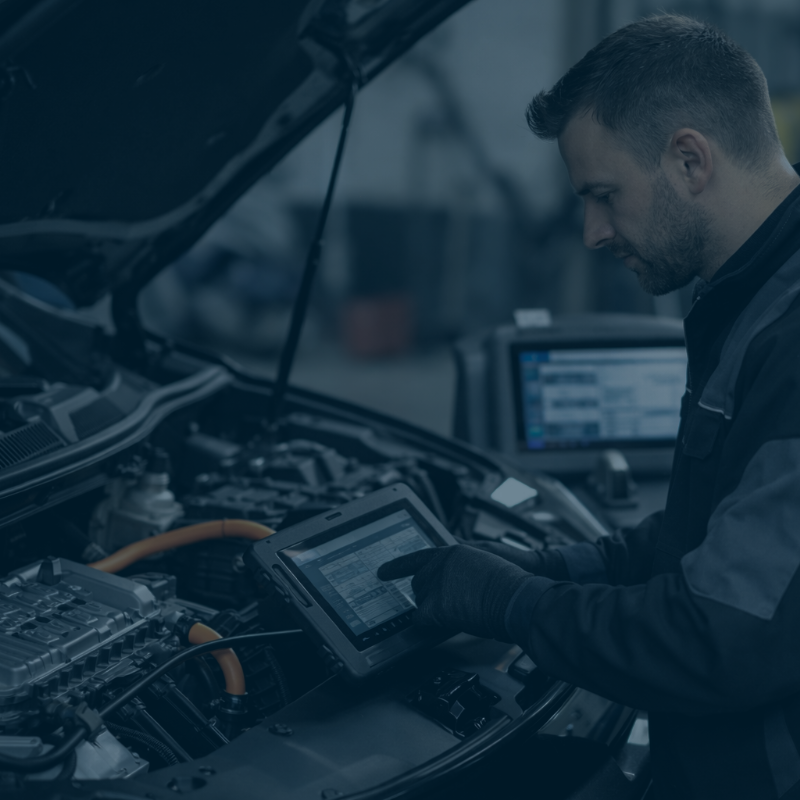
Hiring experienced Vehicle Technicians continues to be a challenge across the motor trade.
It is not a new issue and is not limited to one region or one type of business. Main dealers, independents and specialist workshops are often competing for the same people and in many cases the roles themselves are broadly similar from one business to the next.
That means people do not move unless there is a clear reason to. A change of employer has to feel worthwhile, not just a different company name or a different badge on their uniform.
At the same time, the overall pool of technicians with the right experience is not expanding quickly. The Institute of the Motor Industry continues to report skills gaps across the UK automotive workforce, particularly as vehicle technology becomes more complex and more electric vehicles enter the market
SMMT figures show ongoing growth in EV registrations, which increases demand for technicians who are confident working with high-voltage systems.
Workshops are competing for a relatively small group of experienced technicians, while the skills required within the role continue to evolve.
Where Roles Start to Look the Same
When competition is high, small differences matter more.
If a Vehicle Technician is already in a steady job, they are unlikely to move without a good reason. That does not always mean they are after a large pay rise. It might be better access to training, support towards EV or diagnostic qualifications, or even less weekend work.
Vacancies do not always sit open because there are no technicians in the market. Sometimes they sit open because they look much the same as everything else.
If the salary is slightly behind what competitors are offering, if the process drags on for weeks, or if training and progression are talked about but not clearly backed up, it becomes harder to persuade someone to make a move.
Developing the Team You Already Have
When a workshop runs short, the impact is immediate. Workloads can increase, overtime creeps up and recruitment becomes reactive rather than planned.
One way to ease that pressure over time is by reducing how often that gap appears in the first place.
EV, hybrid and ADAS systems are becoming part of everyday workshop work rather than something specialist. Investing in IMI-accredited training or manufacturer programmes helps workshops build skills internally.
It also changes how technicians see their future within the business. When they are supported to gain new qualifications or broaden their skillset, staying can feel like a sensible option.
Training does not solve an immediate vacancy. Over time, though, it reduces the chances of finding yourself back in the same position.
Apprenticeships and Long-Term Planning
Apprenticeships are still one of the more reliable ways to build future technicians rather than constantly searching for fully qualified ones.
Apprenticeship routes continue to support motor vehicle service and maintenance roles, and many businesses are already making good use of them.
https://www.gov.uk/become-apprentice
They do, however, take time. An apprentice starting this year will not replace a senior technician who leaves next month. Apprenticeships are part of a longer-term approach, not a quick answer to an urgent vacancy.
Over time, though, they bring stability. A steady intake of apprentices means you are developing technicians who understand your systems, your standards and how your workshop operates. That familiarity often supports retention and makes progression into senior roles more straightforward.
For larger dealer groups, apprenticeship levy funding can support structured programmes. For independents, partnerships with local colleges or training providers can achieve much the same outcome.
Investment in apprenticeships does not just help one business. Over time, it strengthens the wider motor trade.
Where Recruitment Support Fits In
Training and apprenticeships reduce pressure over time. Most businesses will still need to recruit at some stage.
When that happens, having a realistic view of the industry helps.
Because we focus solely on the motor trade, our understanding comes from day-to-day contact with both technicians and employers. That gives context to where salaries are currently sitting, what often sits behind a resignation and how roles are being received.
That wider view shapes how a vacancy is handled. It might mean sense-checking salary against what is actually being offered elsewhere, adjusting how the role is described or tightening up the hiring process so good candidates are not lost along the way.
Many experienced technicians are not actively applying for jobs. They are reachable, but rarely through advertising alone.
In an industry where roles often look similar on paper, what attracts someone to move matters more.
A More Balanced Approach to Hiring
There is no single fix for the technician shortage.
Pay needs to reflect current expectations. Training needs to keep pace with changing vehicle technology. Apprenticeships need to form part of a longer-term plan. Recruitment needs to be approached with an accurate view of how the industry is operating.
None of these on their own will solve the shortage. Together, they place a business in a far stronger position.