
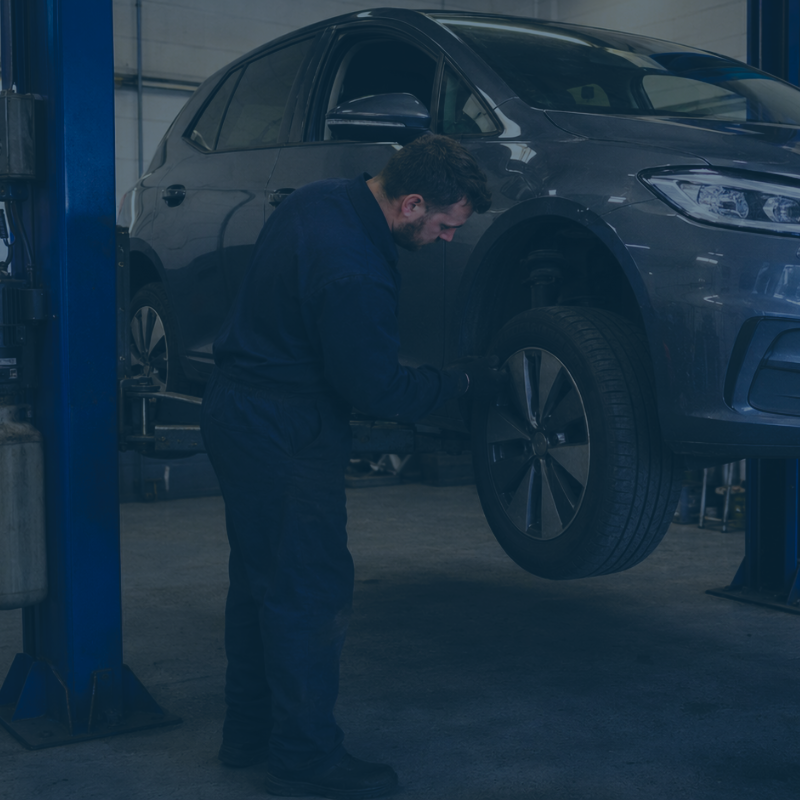
For an experienced Vehicle Technician, gaining an MOT testing qualification can be a practical way to broaden your skills and open up more opportunities within the motor trade. If you are still exploring the wider role, our Vehicle Technician Career Guide explains the typical responsibilities, skills and progression routes.
Many workshops need people who can do more than one thing well. A technician who can complete servicing and repairs, support diagnostic work and carry out MOT tests gives an employer greater flexibility across the working day. Perfect Placement vacancy data also shows that roles combining Vehicle Technician and MOT Tester responsibilities advertise stronger average earning potential than standalone MOT Tester positions.
Becoming an MOT Tester does involve more than simply having workshop experience. You will need to meet the DVSA eligibility requirements, complete an approved qualification course and pass a demonstration test before you can begin testing vehicles.
In short: An experienced Vehicle Technician can become an MOT Tester if they meet the DVSA eligibility rules, complete the required training and pass an MOT demonstration test. The qualification can broaden your job options, while combined Vehicle Technician and MOT Tester roles show stronger average earning potential than standalone testing positions.
Key Takeaways
- Vehicle Technicians generally need at least four years of relevant full-time experience before training as an MOT Tester.
- You must hold an accepted qualification or accreditation, although a Level 3 qualification is not the only possible route.
- Perfect Placement data shows an average advertised basic salary of £35,886 and average OTE of £39,767 across MOT-related salary records.
- Combined Vehicle Technician and MOT Tester roles advertised an average OTE of £42,102.
- An MOT qualification broadens workshop skills, but separate training is needed to work directly on high-voltage electric vehicle systems.
Already qualified? View our current permanent MOT Tester jobs across the UK.
Becoming an MOT Tester
What the Role Involves
An MOT Tester checks whether vehicles meet the required road safety and environmental standards. The role involves inspecting key areas of a vehicle, recording the result accurately and identifying defects or advisory items.
Some positions focus mainly on MOT testing. Others combine testing with servicing, repairs and general workshop duties. For a Vehicle Technician, this combined route can provide more variety and make existing mechanical skills even more useful to an employer.
MOT Tester Qualifications and Requirements
For most technicians looking to test cars and light commercial vehicles, the Driver and Vehicle Standards Agency requires you to:
- Hold a current, full UK driving licence for the vehicle classes you want to test
- Have at least four years of full-time experience servicing and repairing the types of vehicles you intend to test
- Hold an accepted automotive qualification or accreditation
- Have no unspent convictions for criminal offences
- Be considered of good repute by the DVSA
A Level 3 automotive qualification is commonly requested by employers, but it is not the only qualification route accepted by the DVSA. Technicians should check their exact qualification or accreditation against the current GOV.UK MOT Tester eligibility guidance before booking a course.
Completing the MOT Tester Course
Once your eligibility has been confirmed, you must complete an approved MOT Tester qualification course.
For class 4 and 7 vehicles, covering cars and many light commercial vehicles, the course must include at least 29 hours of training, with a minimum of eight hours of practical training.
What you will learn:
- Safe working practices
- Pre-test checks
- Correct MOT testing procedures
- Working within an authorised vehicle testing station
- Professional development as an MOT Tester
The course includes a multiple-choice test and a practical assessment. After completing the qualification, you must also pass an MOT demonstration test observed by the DVSA before you can begin testing vehicles independently. Full details are available in the official MOT Tester course guidance.
The total timeframe depends on course availability and how quickly the demonstration test can be arranged. The course itself must meet the minimum training hours, while the DVSA advises that arranging the demonstration test can take several weeks. It is therefore sensible to allow time for both stages rather than expecting to qualify immediately after completing the course.
Challenges to Consider Before Becoming an MOT Tester
Becoming an MOT Tester brings additional responsibility as well as new career options. Before committing to the qualification, consider the day-to-day realities:
- Personal responsibility: you must follow the correct process and record accurate, impartial results.
- Repetitive testing: busy testing periods can involve completing the same inspection sequence several times a day.
- Physical demands: the role involves regular movement around and underneath vehicles.
- Customer pressure: some motorists may challenge a failure or advisory, even when the correct standards have been applied.
- Continued learning: annual training and assessment are required to keep your testing status current.
For technicians who enjoy careful, methodical work, these responsibilities can be rewarding. For those who prefer constant mechanical variety, a combined Vehicle Technician and MOT Tester position may be a better fit than a testing-only role.
MOT Tester Salary and Career Value
Salary depends on location, employer type, working hours and whether the role combines MOT testing with servicing and repairs.
Across 317 valid advertised salary records analysed by Perfect Placement in July 2026, MOT-related roles showed an average basic salary of £35,886 and a median basic salary of £35,000. Average advertised OTE was £39,767, with a median of £40,000.
Most advertised basic salaries sat between approximately £34,000 and £38,000, although the wider dataset ranged from £26,000 to £50,000.
These figures should be treated as advertised vacancy insight rather than a guaranteed salary. When comparing packages, look at:
- Basic salary and realistic OTE
- Overtime and bonus arrangements
- Working hours and Saturday rota
- Training and future development
- The balance between MOT testing and mechanical work
Does an MOT Licence Increase a Vehicle Technician's Earning Potential?
The salary data suggests that employers place additional value on technicians who can support both the MOT lane and the wider workshop.
Standalone MOT Tester vacancies advertised an average basic salary of £35,977 and average OTE of £38,527. Combined Vehicle Technician and MOT Tester roles averaged £36,843 basic and £42,102 OTE.
The difference in basic salary is relatively modest, but the combined roles showed noticeably stronger advertised earning potential. There are several practical reasons an employer may value this combination:
- More flexible scheduling: the technician can move between booked MOTs, servicing and repairs as demand changes.
- Fewer handovers: where appropriate, the same technician can identify an issue during testing and contribute to the wider mechanical work needed afterwards.
- Better workshop coverage: a multi-skilled technician can help cover testing demand, holidays and unexpected absences.
- Broader service capacity: the workshop can support more types of customer work without relying on a testing-only employee for every MOT slot.
This flexibility can help a workshop use its available time and bays more effectively. That commercial value can support stronger advertised OTE, although the final package will still depend on the employer and role.
It would be misleading to suggest that an MOT licence automatically makes every Vehicle Technician better paid. Diagnostic ability, manufacturer experience, EV qualifications, progression into a Master Technician role and local demand can all have a significant effect on salary. The clearest benefit is that the licence can increase the number and variety of roles available to you.
You can compare the wider market through our Vehicle Technician Salary Guide.
Modern Vehicle Technology and Future Demand
Why Modern Vehicle Technology Matters
Modern vehicle technology matters because MOT Testers must inspect vehicles accurately even when their systems and layouts differ from older petrol and diesel models. Electric, hybrid and technology-heavy vehicles increasingly feature:
- High-voltage components and clearly defined safety zones
- Electronic parking brakes
- Digital displays and warning information
- Driver-assistance systems
- Manufacturer-specific testing instructions
An MOT Tester does not need to repair every system they inspect. They do, however, need to understand how to examine the vehicle correctly, follow current testing guidance and recognise when model-specific information is required.
The DVSA provides testing advice covering manufacturers including Tesla and established brands producing electric and hybrid vehicles. That means testers must remain comfortable using current technical information rather than relying entirely on knowledge developed around older vehicles. See the latest DVSA vehicle-specific testing guidance.
Does an MOT Qualification Allow You to Repair Electric Vehicles?
No. These are separate areas of competence.
An MOT qualification allows you to conduct MOT tests within the vehicle classes for which you are authorised. It does not automatically qualify you to repair or work directly on high-voltage electric vehicle systems.
Electric and hybrid vehicles can operate at significantly higher voltages than conventional 12 or 24-volt systems. The Health and Safety Executive warns that accidental contact with live components can be fatal, making suitable training and safe working procedures essential. The HSE electric and hybrid vehicle guidance explains the principal risks.
Technicians who want to work directly on electric or hybrid systems should therefore consider recognised EV or high-voltage training alongside their MOT qualification. Our Hybrid and Electric Vehicle Technician Career Guide provides more detail about this specialist career route.
Demand for EV-Qualified Technicians
The long-term demand for technicians who can work safely with electric vehicles is expected to grow.
The Institute of the Motor Industry reported that 74,734 UK technicians held an EV qualification at the end of 2025, representing around 35% of the technician workforce. It forecasts that demand could exceed supply by more than 43,000 technicians by 2035.
The latest IMI EV TechSafe Technician Forecast shows that qualification numbers are rising, but not yet quickly enough to meet expected future demand.
This does not mean that every MOT Tester needs to become an EV specialist immediately. It does show why continued learning matters. A technician who can carry out MOT tests, complete mechanical work and operate safely around modern electric and hybrid vehicles gives an employer greater flexibility and gives themselves more career options.
Keeping Your MOT Qualification Current
Becoming an MOT Tester comes with an ongoing responsibility to maintain your knowledge.
Testers must complete the required training and pass an assessment during every annual training period, which runs from April to March. They are responsible for recording their training, keeping suitable evidence and passing the assessment before the deadline.
The current process is covered in the GOV.UK annual training and assessment guidance.
Continued training is not simply an administrative requirement. It helps testers remain confident as inspection guidance, vehicle systems and testing procedures change.
Is Becoming an MOT Tester the Right Next Step?
For many Vehicle Technicians, it can be a sensible addition to an established workshop career.
You may be ready to take the next step if you:
- Have at least four years of relevant full-time workshop experience
- Hold an accepted automotive qualification or accreditation
- Have a current UK driving licence for the relevant vehicle classes
- Are comfortable inspecting vehicles carefully and recording accurate results
- Want to broaden your workshop responsibilities
- Are prepared to complete annual training and assessment
The role does carry responsibility. MOT Testers must work accurately, follow DVSA standards and remain confident making decisions about vehicle safety. However, for technicians who enjoy methodical inspection work, the qualification can add variety and increase access to permanent opportunities across dealerships, independent garages, fast-fit centres and specialist workshops.
Finding Your Next MOT Tester Role
Perfect Placement has worked exclusively within the UK motor trade since 2003 and has helped more than 34,000 automotive professionals find new opportunities. We support candidates across every stage of their careers.
If you are already qualified, our recruitment specialists can help you compare permanent MOT Tester and combined Vehicle Technician opportunities based on salary, hours, location, workshop type and future development. If you are considering the qualification, exploring current vacancies can also help you understand what employers are asking for in your area. You can also use our guide to writing an automotive CV when adding new qualifications and testing experience.
Perfect Placement also provides dedicated MOT Tester recruitment support for automotive employers looking to strengthen their workshop teams.
Ready to Explore MOT Tester Opportunities?
Search our current permanent MOT Tester and Vehicle Technician vacancies across the UK, or speak with a specialist automotive recruiter about your next move.
Frequently Asked Questions
Can a Vehicle Technician become an MOT Tester?
Yes. A Vehicle Technician can become an MOT Tester if they meet the DVSA eligibility requirements, complete an approved qualification course and pass an MOT demonstration test.
Do you need a Level 3 qualification to become an MOT Tester?
A Level 3 automotive qualification is commonly requested by employers, but it is not the only accepted route. The DVSA maintains a list of accepted qualifications and accreditations, so technicians should check their exact credentials before booking training.
How long does an MOT Tester course take?
For class 4 and 7 vehicles, the approved course must include at least 29 hours of training, including a minimum of eight hours of practical training. You must then pass the DVSA demonstration test before testing independently.
How much does an MOT Tester earn?
Across recent Perfect Placement vacancy data, MOT-related roles showed an average advertised basic salary of £35,886 and average OTE of £39,767. Salary varies according to location, employer, hours and whether mechanical work is included.
Does an MOT qualification allow you to repair electric vehicles?
No. MOT testing authorisation and high-voltage EV competence are separate. Technicians working directly on electric or hybrid systems need suitable training and must follow appropriate safe working procedures.
Do MOT Testers need annual training?
Yes. MOT Testers must complete the required training and pass an assessment during each annual training period, which runs from April to March.

About the Author
As Marketing & Automation Manager at Perfect Placement, Ashley Camies has 14 years of automotive recruitment experience. Since 2011, she has supported motor trade employers and candidates across the UK. She specialises in strengthening recruitment processes and candidate engagement, providing informed commentary on hiring trends and talent market strategy based on over a decade of sector insight.